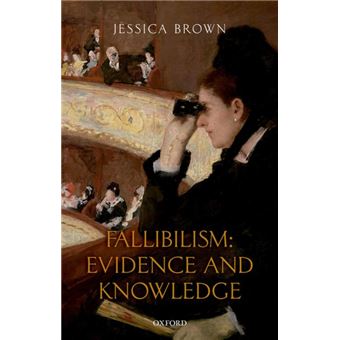
Fallibilism: Evidence and Knowledge

Resumen
What strength of evidence is required for knowledge? Ordinarily, we often claim to know something on the basis of evidence which doesn't guarantee its truth. For instance, one might claim to know that one sees a crow on the basis of visual experience even though having that experience does not guarantee that there is a crow (it might be a rook, or one might be dreaming). As a result, those wanting to avoid philosophical scepticism have standardly embraced "fallibilism": one can know a proposition on the basis of evidence that supports it even if the evidence doesn't guarantee its truth. Despite this, there's been a persistent temptation to endorse "infallibilism", according to which knowledge requires evidence that guarantees truth. For doesn't it sound contradictory to simultaneously claim to know and admit the possibility of error? Infallibilism is undergoing a contemporary renaissance. Furthermore, recent infallibilists make the surprising claim that they can avoid scepticism. Jessica Brown presents a fresh examination of the debate between these two positions. She argues that infallibilists can avoid scepticism only at the cost of problematic commitments concerning evidence and evidential support. Further, she argues that alleged objections to fallibilism are not compelling. She concludes that we should be fallibilists. In doing so, she discusses the nature of evidence, evidential support, justification, blamelessness, closure for knowledge, defeat, epistemic akrasia, practical reasoning, concessive knowledge attributions, and the threshold problem.
eBook con Kobo by Fnac
Miles de libros en cualquier parte gracias al libro electrónico de Kbo by Fnac. Una experiencia de lectura óptima tan cómoda con leer un libro en papel
DescubrirOpiniones de clientes
Sé el primero en dar
tu opinión sobre el producto
Características
- ISBN
-
9780192521927
- SKU
-
1003078244